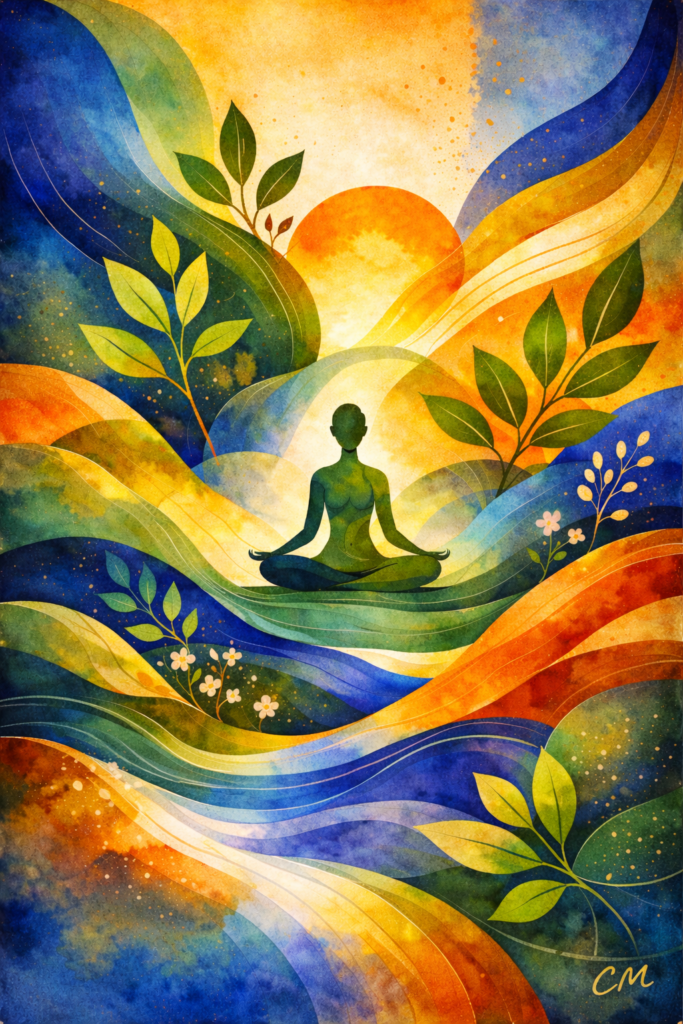
Wellness is one of those words we hear often, yet many people still wonder what it really means. Is it about eating better, exercising more, getting enough sleep, or learning how to relax? The truth is that wellness includes all of these things, but it also goes much deeper.
Wellness is the active pursuit of activities, choices, and lifestyles that lead to a state of holistic health. In simple terms, it means making daily choices that support not only the body, but also the mind, emotions, relationships, sense of purpose, and even our connection to the environment around us.
What makes wellness so important is that it is not a fixed state. It is not something we either have or do not have. It is a living process. It grows through awareness, intention, and the small decisions we make every day.
Wellness is not just about physical health
When many people hear the word wellness, they think first of diet, exercise, and fitness. Physical health is certainly part of it, but true wellness is much broader than that.
A person may be physically fit and still feel mentally exhausted, emotionally overwhelmed, socially disconnected, or unsure of their purpose. On the other hand, someone who is still working on their physical health may feel deeply grounded, connected, and emotionally strong. That is why wellness is best understood as a whole-life approach.
It asks us to look at how we are really living. Are we resting enough? Are we managing stress in healthy ways? Are we making time for meaningful relationships? Are we learning, growing, and staying connected to what matters most to us?
These questions are at the heart of wellness.
A concept with ancient roots
Although the word wellness feels modern, the idea behind it is very old. Ancient cultures in India, China, Greece, and Rome all recognised that health involves balance. They understood that body, mind, spirit, and environment are connected, and that lifestyle plays a major role in human wellbeing.
Centuries later, in Europe and the United States, thinkers and health reformers continued to explore more holistic ways of living. They emphasised prevention, self-care, nutrition, exercise, fresh air, rest, and the body’s natural ability to heal. These ideas helped shape the modern wellness movement.
In the 1960s and 1970s, wellness became more widely discussed through the work of health pioneers such as Halbert Dunn, Jack Travis, Don Ardell, and Bill Hettler. Their message was simple but powerful: health is not only about treating illness. It is also about building a better quality of life through the way we live each day.
That idea still feels relevant now.
The six dimensions of wellness
One of the most helpful ways to understand wellness is to see it as made up of several connected dimensions. These dimensions support one another, and when one is neglected, the others are often affected too.
Physical wellness
This is about caring for the body through movement, nourishment, sleep, rest, and healthy habits. It is not about perfection or appearance. It is about giving the body what it needs to function well and feel strong.
Mental wellness
Mental wellness involves learning, thinking, staying curious, and engaging the mind in positive ways. Reading, problem-solving, creativity, and new experiences all help keep the mind active and healthy.
Emotional wellness
This dimension is about being aware of feelings, accepting them, and expressing them in healthy ways. Emotional wellness includes resilience, self-understanding, and the ability to respond thoughtfully rather than react impulsively. My painting “Mindful” is shown below.

Spiritual wellness
Spiritual wellness is about meaning, values, and purpose. For some people it is linked to religion or faith. For others it may be found in nature, creativity, quiet reflection, or simply a sense of connection to something larger than themselves.
Social wellness
We all need connection. Social wellness grows through supportive relationships, friendship, kindness, belonging, and meaningful community. Feeling connected to others is a powerful part of overall health.
Environmental wellness
This reminds us that our surroundings affect how we feel. Clean spaces, time in nature, safe communities, and a healthy planet all contribute to better living. Our wellbeing is closely tied to the world we live in.
Wellness is an active process
One of the most important things to understand is that wellness is active. It does not describe a perfect state of life where everything is calm and organised. Instead, it describes the process of making choices that move us in a healthier direction.
That may mean drinking more water, getting outside more often, setting firmer boundaries, reducing stress, speaking more kindly to ourselves, or making time for rest. It may also mean asking for help when we need it.
Wellness is not about doing everything at once. It is about paying attention and making better choices where we can.
Wellness, wellbeing, and happiness
These words are often used together, but they are not exactly the same.
Happiness is usually a feeling. It can be bright and uplifting, but it can also come and go.
Wellbeing is broader. It describes the overall condition of a person’s life, including health, stability, comfort, and satisfaction.
Wellness is the action behind both. It is the set of habits, choices, and intentions that help support a healthier and more balanced life.
In that sense, wellness is not a mood. It is a way of living.
Why wellness matters now more than ever
Modern life can be demanding. Many people feel stretched, distracted, and under pressure. Stress has become common, rest is often pushed aside, and many people feel disconnected from nature, community, and even themselves.
That is why wellness matters so much today. It invites us to slow down and take better care of the whole person, not just the visible parts of health. It reminds us that rest is productive, that emotional balance matters, and that a meaningful life is not built on pressure alone.
Wellness also teaches us that small choices matter. A short walk, a good night’s sleep, a healthy meal, a moment of stillness, a conversation with someone we trust — these things may seem simple, but over time they shape how we feel and how we live.
A lifelong journey, not a finish line
Perhaps the most comforting thing about wellness is that it is not about getting everything right. No one lives in perfect balance all the time. Life changes, challenges appear, and our needs shift from season to season.
Wellness is not about reaching some flawless version of ourselves. It is about staying aware, staying open, and continuing to make choices that support health and balance in whatever season we are in.
Some days wellness will look like strength and momentum. Other days it will look like rest, quiet, and recovery. Both are valid. Both matter.
Final thoughts
Wellness is more than a trend and more than a buzzword. It is a thoughtful, active, and compassionate approach to living well. It encourages us to care for the body, nurture the mind, understand our emotions, strengthen relationships, seek purpose, and respect the environment that supports us.
At its heart, wellness is about living with greater awareness and intention. It is not about perfection. It is about direction. And every small step toward balance, health, and meaning is part of that journey.
I can also make this sound even more like your website voice by giving it a slightly more reflective, calming style.