How Viewing Art Can Support Mindfulness and Inner Calm
In a fast-moving world, it can be difficult to find true stillness. Our minds are often filled with noise, distraction, unfinished thoughts, and the quiet pressure of daily life. Being on social media especially endless scrolling Facebook is not peaceful, in its real sense. Mindfulness offers a way back to ourselves. It invites us to slow down, pay attention, and reconnect with the present moment. One of the most gentle and rewarding ways to practise this is through viewing art.
Art has a natural ability to hold our attention in a quiet, meaningful way. It asks nothing from us except that we pause and look. In that pause, something shifts. The mind begins to settle. Breathing becomes slower. Thoughts lose some of their urgency. We become present, not because we are forcing ourselves to be, but because the artwork has given us something real to notice.
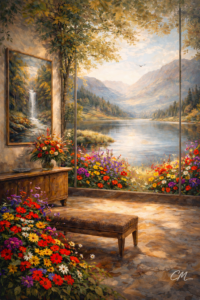
This is one of the great strengths of art. It can draw us out of distraction and into awareness.
Mindfulness is often described as paying attention to the present moment without judgment. That is exactly what slow looking encourages. Rather than rushing past an image or making a quick decision about whether we like it, we stay with it. We allow it time. We notice what is there. Colour, light, texture, movement, shape, space, mood. Bit by bit, the artwork reveals itself. And as it does, we begin to settle more deeply into the experience of simply looking.
This kind of attention can be deeply calming. When you focus on the details of a painting, whether that is the softness of blended colour, the energy of a brushstroke, or the balance of a composition, the mind has less space to spiral into worry. Looking becomes a quiet anchor. Much like listening to the sea or watching the movement of clouds, it brings the mind back to the here and now.
That is why viewing art can help reduce stress. It creates a moment of stillness in the middle of a busy day. It gives your thoughts somewhere gentle to rest. Instead of being pulled in ten directions at once, you are invited into one moment, one image, one feeling. Even a few minutes spent with a piece of art can create a sense of calm and emotional space.
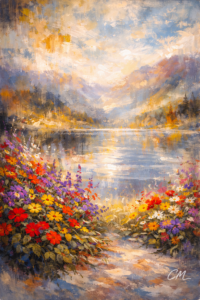
There is also something deeply restorative about close observation. Art encourages us to notice things we might otherwise miss. A shift from warm to cool colour. A textured edge. A quiet contrast between light and shadow. A mark that feels spontaneous and alive. This careful looking strengthens our ability to observe, and that carries into everyday life. We may begin to notice more in the natural world, in our surroundings, and in the emotions of others.
Observation is closely connected to empathy. The more attentively we look, the more open we become to different perspectives and emotional layers. Art does not always explain itself immediately. Sometimes it asks us to stay curious. That patience, that willingness to remain open, is valuable far beyond the gallery wall.
Mindful viewing also encourages a non-judgmental way of experiencing art. Many people feel they need to understand an artwork properly before they can respond to it. They worry about whether they are seeing the right meaning or whether they know enough about the artist or the style. But mindfulness offers a gentler approach. It reminds us that our direct experience matters.
You do not need expert knowledge to sit with a painting and feel moved by it. You do not need historical context to sense peace in a quiet landscape, energy in a bold abstract work, or tenderness in a subtle use of colour. Your response is valid because it is real. Mindfulness allows that experience to exist without immediately labelling it as right or wrong, good or bad.
That freedom can be surprisingly powerful.
When we stop judging what we see, we often become more aware of what we feel. A piece of art might bring comfort, memory, reflection, hope, or even sadness. It may stir something you cannot easily name. That is part of its value. Art reaches places that language does not always reach first. Mindful viewing gives those responses room to breathe.
The beauty of this practice is that it can happen almost anywhere. You do not need a formal gallery or a quiet museum to experience art mindfully. You can do it at home with a painting on your wall, a framed print, a favourite book of artworks, or even an image on a screen. What matters is not the place, but the quality of attention you bring.
A simple way to begin is to choose one piece of art and spend several minutes with it. Let yourself slow down. Notice the colours first. Are they muted or vivid, cool or warm, peaceful or dramatic? Then look at texture and mark-making. Are the brushstrokes smooth and delicate, or bold and expressive? Follow the movement of the image. Where does your eye go first? Where does it drift next?
As you look, breathe slowly and naturally. If your thoughts wander, return your attention to the artwork. There is no need to analyse too much. Instead, ask yourself simple questions. What do I notice? What do I feel? What mood does this piece create? What draws me back into it?
This is not about finding the perfect answer. It is about allowing the artwork to become a point of presence.
It is also worth saying that mindful art viewing is different from art therapy. Art therapy is a professional and structured therapeutic practice. Mindful viewing is a personal wellbeing habit that anyone can explore. It is accessible, simple, and quietly nourishing. It offers a way to support mental wellness through stillness, reflection, and visual connection.
For those of us drawn to art, this can feel especially meaningful. Art does more than decorate a wall. It can shape the atmosphere of a room, shift our mood, and create moments of pause in our everyday lives. It can remind us to look more carefully, feel more honestly, and live a little more slowly.
In that sense, viewing art becomes more than observation. It becomes a form of care.
To spend time with a piece of art is to step away from rush and return to awareness. It is a quiet act, but not a small one. In a culture filled with speed, noise, and distraction, slow looking is a powerful choice. It helps us rediscover stillness. It helps us breathe. It helps us come back to the present.
And often, that is exactly where peace begins.