When Nature Becomes Abstract: The Wild World Through Art
Nature has always been one of humanity’s greatest sources of inspiration and it has been mine. From ancient cave paintings to romantic landscapes, artists have tried to capture the beauty of forests, oceans, skies, and wildlife. However, in the modern world—where climate change, deforestation, and species loss are daily realities—many artists are turning to abstract art to express what can no longer be easily described with realism alone. Through shape, colour, movement, and texture, abstract art offers a powerful way to explore our emotional connection to nature and the fragile environment we share.
As you are aware, abstract art does not try to copy the physical world. Instead, it translates the feeling of a place, a creature, or an environmental issue into visual language. A storm might become a clash of deep blues and sharp whites. A forest may be suggested through layered greens and rough textures. A coral reef could appear as a vibrant explosion of colour and pattern. These works invite the viewer to experience nature rather than simply observe it, encouraging a more personal and emotional response.
Wildlife, too, often appears in abstract form. Rather than painting a detailed animal, artists may hint at its energy through flowing lines or fragmented shapes. The movement of birds, or the grace of a deer can be suggested through rhythm and motion instead of anatomy. This approach reflects how humans increasingly encounter wildlife—not face to face, but through memory, imagination, and concern. Abstract representations remind us that animals are not just objects to be studied, but living beings connected to us through the same ecosystems. The painting below was created with this in my mind – Nature’s Harmony.
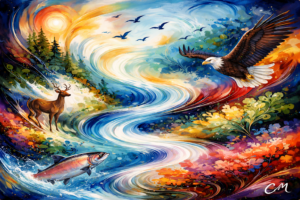
The environment itself is a major theme in contemporary abstract art. Many artists use abstraction to express urgency, loss, and hope. I try to always look on the positive side by painting healthy ecosystems that are shown through harmony and balance. The contrast between chaos and calm can symbolise the struggle between human impact and nature’s resilience. In this way, abstract art becomes a visual voice for the planet, communicating messages that statistics and reports often fail to reach emotionally.
One of the most powerful aspects of abstract art is its openness. There is no single meaning. Viewers bring their own experiences and feelings to the artwork. A painting inspired by melting ice caps might remind one person of rising sea levels, while another may feel a sense of sadness or urgency without knowing exactly why. This shared emotional space encourages reflection and, ultimately, awareness.
As the natural world faces unprecedented challenges, abstract art offers a new way to connect with it. By moving beyond literal images, artists create space for imagination, empathy, and dialogue. Nature, wildlife, and the environment are no longer just subjects—they become emotions, energies, and stories expressed through colour and form. In abstract art, the wild world still speaks, even when words are not enough.