The Resurgence of Neo Art Deco in Contemporary Art
In recent years, a striking visual trend has begun to reappear in contemporary design and art: Neo Art Deco. Drawing inspiration from the iconic Art Deco movement of the 1920s and 1930s, this modern interpretation blends the bold geometric elegance of the past with contemporary materials, colours, and artistic approaches. The result is artwork that feels both nostalgic and modern—timeless yet fresh.
Neo Art Deco celebrates the same sense of glamour and precision that defined the original Art Deco era, but it adapts these ideas for today’s interiors and creative styles. Through clean geometry, luxurious accents, and dramatic contrasts, artists are rediscovering how powerful structured design can be in modern spaces.
The Origins of Art Deco
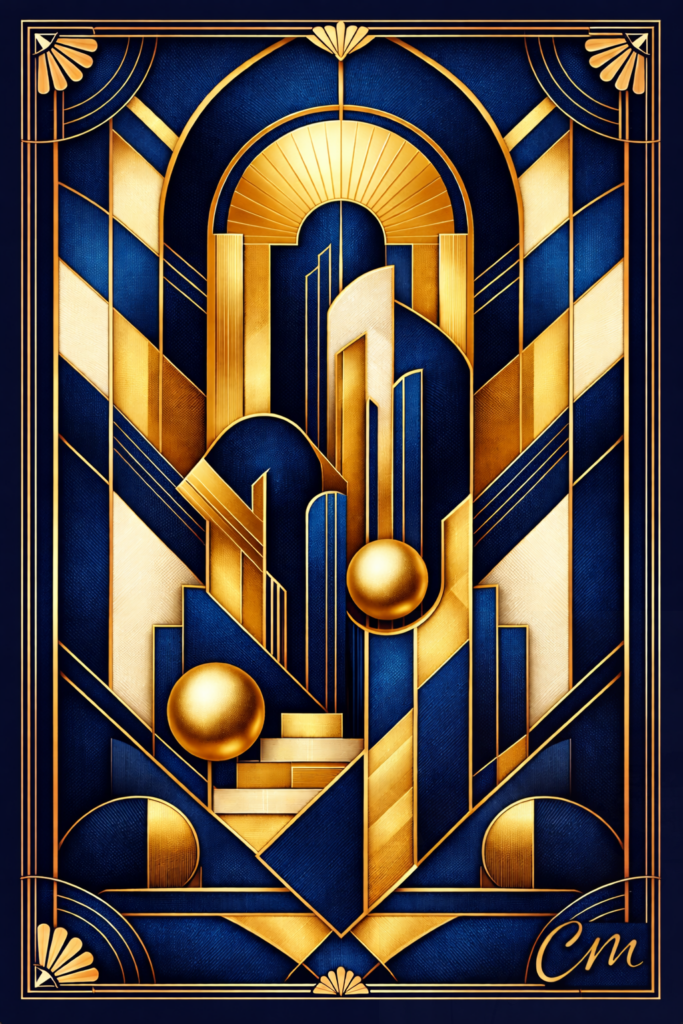
To understand Neo Art Deco, it helps to briefly explore its origins. Art Deco first rose to prominence in the early twentieth century, particularly during the 1920s and 1930s. It emerged as a celebration of modernity, industry, and luxury following the First World War. Designers and artists embraced bold forms, symmetrical patterns, and streamlined shapes that symbolised progress and sophistication. My painting below, Congregation, is an example of this today.

Art Deco architecture, furniture, fashion, and graphic design all shared a common language: strong geometry, repeating patterns, and a fascination with materials that reflected light and wealth, such as chrome, brass, lacquer, and polished stone. Cities such as New York, Miami, and Paris became showcases for this striking style, with buildings featuring stepped silhouettes, sunburst motifs, and elegant symmetry.
Although the style gradually faded after the Second World War, its influence never completely disappeared. Today, many artists and designers are rediscovering its visual power and reinterpreting it in exciting new ways.
The Rise of Neo Art Deco
Neo Art Deco is not simply a revival of the past; it is an evolution. While it borrows the geometric structure and glamour of traditional Art Deco, contemporary artists incorporate modern materials, colour palettes, and creative techniques.
One of the defining characteristics of Neo Art Deco artwork is the use of bold geometric shapes. Circles, arches, triangles, rectangles, and sweeping curves are arranged in balanced compositions that often emphasise symmetry. These forms create a sense of order and rhythm within the artwork, guiding the viewer’s eye across the composition.
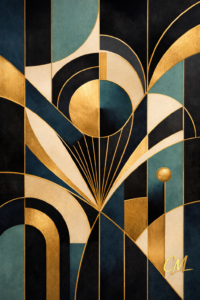
Unlike purely minimalist geometric art, Neo Art Deco tends to emphasise depth and structure. Shapes may overlap, layer, or appear sculptural, giving the impression of dimensionality and architectural form. This approach adds visual richness while maintaining a clear and organised composition. Sophistication, shown below is my interpretation of this type of Neo Art Deco.
Luxurious Metallic Accents
Another hallmark of Neo Art Deco is the use of metallic elements, particularly gold and brass tones. Metallic highlights introduce a sense of luxury and refinement to geometric compositions. Whether used as thin lines, decorative accents, or dominant shapes, these reflective surfaces catch the light and add visual drama.
Gold spheres, arcs, and thin metallic outlines are often placed against darker backgrounds such as black, deep blue, or charcoal grey. This contrast enhances the luminous quality of the metallic tones, creating a sophisticated and striking visual effect.
In digital and abstract artwork, metallic textures can also be simulated through gradients and highlights, giving the appearance of polished metal without using physical materials. This allows artists to experiment freely with luxurious finishes while maintaining a modern aesthetic.
Symmetry and Balance
Symmetry plays a crucial role in Neo Art Deco compositions. Balanced arrangements of shapes create a sense of stability and elegance that is visually pleasing to the eye. Many artworks feature mirrored forms or carefully aligned geometric structures that reinforce this sense of harmony.
However, contemporary artists often introduce subtle asymmetry or unexpected colour contrasts to keep the composition dynamic. This blend of structure and creativity ensures the artwork remains engaging rather than overly rigid.
Dramatic Colour Contrasts
Neo Art Deco artworks frequently rely on high-contrast colour combinations to enhance their visual impact. Dark backgrounds paired with bright geometric shapes allow metallic accents and bold colours to stand out dramatically.
Classic combinations include black and gold, deep blue with brass tones, or rich reds contrasted with ivory or cream. These palettes evoke the glamour of historic Art Deco interiors while still feeling relevant in modern design environments.
The contrast between matte colours and reflective metallic elements further amplifies the sense of depth and sophistication within the artwork.
Neo Art Deco in Modern Interiors
One reason Neo Art Deco has gained popularity is its ability to function as a powerful focal point in interior design. Large geometric artworks with metallic accents immediately draw attention and can anchor a room visually.
In contemporary homes, Neo Art Deco pieces often complement minimalist furniture and neutral interiors. The structured geometry provides visual interest without overwhelming the space, while metallic highlights add warmth and luxury.
These artworks work particularly well in living rooms, dining areas, and entrance halls, where they can create a sense of elegance and refinement. Framed prints or canvas pieces featuring bold geometric compositions can transform an otherwise simple wall into a striking design feature.
A Timeless Modern Style
Perhaps the greatest strength of Neo Art Deco is its ability to feel both modern and timeless. By combining historic design principles with contemporary creativity, artists are producing works that resonate with viewers today while echoing the elegance of the past.
For abstract artists, Neo Art Deco offers a powerful visual language built on geometry, balance, and contrast. Through carefully arranged shapes and luxurious metallic details, this style demonstrates how structure and glamour can coexist within modern art.
As design trends continue to evolve, Neo Art Deco stands as a reminder that the past can still inspire the future. Its bold geometry, refined materials, and dramatic contrasts ensure that this elegant style will continue to influence contemporary art and interiors for years to come.