Texture, Impasto, Drips and Mixed Media
Abstract art gives artists the freedom to explore emotion, movement, colour, and surface without being tied to realistic representation. One of the most exciting aspects of abstract painting is the wide range of techniques that can be used to create visual interest and emotional depth. From thick, sculptural paint to loose drips and scratched lines, experimental methods allow artists to discover new effects and develop a more expressive style.
One of the most striking techniques in abstract art is impasto. Impasto involves applying paint thickly to the canvas so that it stands out from the surface. This creates visible texture and a tactile quality that gives a painting extra depth. Light catches the raised areas differently, making the artwork feel more alive and dimensional. Artists often use brushes for this, but palette knives are especially effective for spreading, scraping, and layering thick paint. Tools such as sponges, squeegees, old cards, or even cloths can also be used to manipulate the paint. These methods create varied textures that make abstract paintings more dynamic and expressive.
Texture plays an important role in abstract work because it adds physical presence. A textured painting does not simply rely on colour or composition alone. It invites the viewer to connect with the artwork through its surface. Rough, smooth, scraped, or layered areas can all create different moods. Heavy texture can suggest energy, force, and movement, while softer textural effects can feel calm and atmospheric. For many artists, texture is not just a finishing detail but a central part of the painting process.
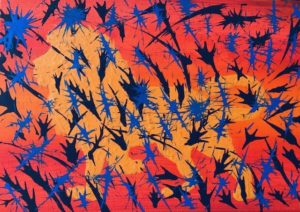
Another popular abstract painting method is drip and pouring techniques. These approaches became especially well known through artists such as Jackson Pollock, who turned painting into an energetic physical act. Instead of brushing paint onto the canvas in a traditional way, the artist pours, drips, flicks, or splashes thin paint across the surface. Gravity becomes part of the creative process, helping to shape the final image. This can result in lively, layered compositions that feel spontaneous and full of motion. Dripping and pouring are ideal for artists who want to embrace unpredictability and allow chance to influence the work.
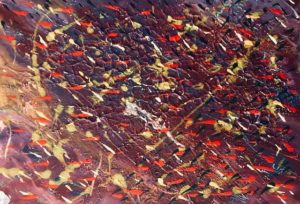
Sgraffito is another powerful technique used in abstract art. This method involves scratching into wet paint to reveal the layers beneath. The contrast between the top layer and the revealed colour underneath creates visual interest and depth. Sgraffito can be done using the end of a brush, a palette knife, a stick, or any sharp tool that creates marks. It is particularly useful for artists who enjoy adding linear elements to their paintings. Scribbling with crayons, pens, or other drawing tools can also be incorporated into the work. Loose handwriting, expressive marks, crossed lines, and written words can all add personality and energy to a piece. These gestures often make the painting feel more immediate and emotionally direct.
For artists who enjoy layering materials, collage and mixed media offer endless possibilities. This approach combines paint with other materials such as paper, fabric, printed text, tissue, or found objects. The result is a multi-dimensional surface that can feel rich, complex, and highly individual. Collage introduces new textures, shapes, and patterns that paint alone may not create. Mixed media also encourages experimentation, allowing the artist to build up layers, cover sections, tear materials, and reveal hidden fragments beneath. This layered approach can make a painting more intriguing and give it a sense of history and process.
A softer and more fluid technique is wet-on-wet painting. This involves applying paint onto a wet surface so that colours blend directly on the canvas. The edges become softer, transitions become more subtle, and the overall effect is often atmospheric and expressive. Wet-on-wet techniques are especially useful in abstract painting when the artist wants to create mood, flow, or gentle movement. Because the paint continues to shift and merge, the process can be unpredictable, which often leads to beautiful and unexpected results.
In contrast, masking and blocking bring structure and control into an abstract composition. Artists use tape, stencils, or cut shapes to block off areas of the canvas and create crisp edges or repeated forms. This can be especially effective when balanced against more chaotic techniques such as dripping, pouring, or heavily textured brushwork. The combination of loose expression and sharp control creates tension and interest within the artwork. Masking can also help organise a composition and guide the viewer’s eye across the painting.
A less commonly discussed but fascinating method is décollage. This is often described as the reverse of collage. Instead of adding pieces to build an image, the artist tears, cuts, or removes parts of an existing surface. This reveals hidden layers beneath and creates distressed, unexpected effects. Décollage can produce a sense of depth, history, and transformation, making it a powerful tool for abstract artists interested in surface and change.
What links all of these techniques is their emphasis on process and experimentation. Abstract art often grows through action, discovery, and response rather than rigid planning. By exploring impasto, texture, drips, sgraffito, collage, wet-on-wet methods, masking, and décollage, artists can create work that feels expressive, physical, and emotionally engaging. These techniques remind us that abstract painting is not only about what an image looks like, but also about how it is made and how that process can be felt by the viewer.