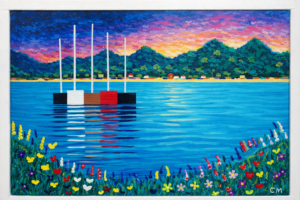
Abstract art is often spoken about as though it is one single language, but in reality it holds many different voices. Some abstract paintings feel bold, urgent, and full of raw energy. Others feel quieter, more atmospheric, and shaped by memory, light, and mood. That is often where the difference between Abstract Expressionism and Abstract Impressionism begins.
Although the names sound similar, these two approaches to painting create very different emotional experiences. Both grew from a desire to move beyond strict realism, and both value freedom, gesture, and feeling. Yet one often speaks through force and intensity, while the other speaks through colour, perception, and a softer sense of presence.
For artists and collectors alike, understanding this difference can open up a richer way of looking at abstract work.
The energy of Abstract Expressionism
Abstract Expressionism emerged in New York in the 1940s, during a time when artists were searching for new ways to express the emotional weight of the modern world. Rather than painting a scene exactly as it appeared, these artists used gesture, movement, and scale to communicate inner feeling.
In this style, the canvas became more than a surface. It became a place of action, instinct, and emotional release. Sweeping marks, drips, heavy brushwork, and bold contrasts were often used to create paintings that feel immediate and powerful. There is often a sense that the viewer is witnessing not only the final image, but also the energy of its making.
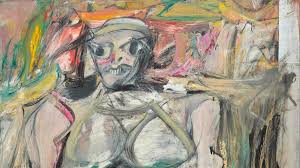
Artists such as Jackson Pollock, Willem de Kooning, Mark Rothko, and Franz Kline are closely connected to this movement. Their work helped shift painting away from description and toward presence. What mattered was not simply what was painted, but how it felt.
Abstract Expressionism often carries intensity. It can feel restless, dramatic, and deeply personal. It draws the viewer into emotion through movement, scale, and force.
The atmosphere of Abstract Impressionism
Abstract Impressionism moves in a slightly different direction. It still values expressive freedom, but it often does so in a gentler, more contemplative way. Rather than focusing primarily on emotional force, it leans more toward light, colour, atmosphere, and the sensation of a moment.
The term has often been linked with Elaine de Kooning, who used it to describe painting that seemed to sit somewhere between Abstract Expressionism and the older spirit of Impressionism. That connection matters, because Abstract Impressionism often feels like a bridge between what is seen and what is felt.
A landscape, a garden, a sky, shifting weather, or a fleeting memory of place may all lie behind the painting, but they are not described in a literal way. Instead, they are softened into layers of colour, texture, and light. The image may hover between recognition and abstraction, allowing the viewer to sense something rather than clearly identify it.
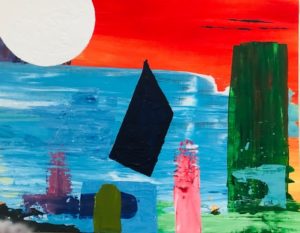
Artists such as Sam Francis, Nicolas de Staël, Patrick Heron, and Harold Cohen are often associated with this approach. Their work can feel luminous, spacious, and alive with changing visual impressions.
Where Abstract Expressionism can feel like emotional energy released outward, Abstract Impressionism often feels like atmosphere gathered inward.
The difference in feeling
This is perhaps the clearest way to understand the difference between the two.
Abstract Expressionism often feels immediate, physical, and emotionally charged. It can carry tension, urgency, and boldness. The marks on the canvas are often assertive, and the painting may feel as though it was created in a single rush of feeling.
Abstract Impressionism tends to feel more reflective. It often invites stillness rather than confrontation. Colour becomes a way of suggesting mood, light becomes part of the emotional language, and the painting may unfold more slowly in the viewer’s mind.

Neither approach is better than the other. They simply offer different paths into abstraction. One is often driven by raw inner force. The other by perception, atmosphere, and shifting sensation.
Why this matters in contemporary art
These distinctions still matter today because many contemporary artists continue to work somewhere along this spectrum. Some paintings are built through bold gesture and emotional intensity. Others are shaped through layered colour, softened forms, and the memory of land, weather, or changing light.
For those of us drawn to nature, place, and the emotional weight of landscape, Abstract Impressionism can feel especially resonant. It allows painting to move beyond strict representation while still holding onto mood, environment, and the quiet power of what we see around us. It creates space for interpretation, but also for feeling.
That is part of what makes abstract art so compelling. It does not need to explain everything. It can suggest, evoke, and leave room for reflection.
Final thoughts
When we compare Abstract Impressionism and Abstract Expressionism, we are really looking at two different ways abstraction can speak. One speaks through energy, movement, and emotional force. The other speaks through light, atmosphere, and the poetry of perception.
Both movements helped expand the language of modern painting. Both showed that art does not need to be literal to be meaningful. And both continue to influence artists who want their work to carry not only colour and form, but presence, mood, and emotional depth.
For me, that is where this conversation becomes most interesting. Abstract painting is never only about style. It is about how a painting lives, breathes, and quietly holds feeling within its surface.